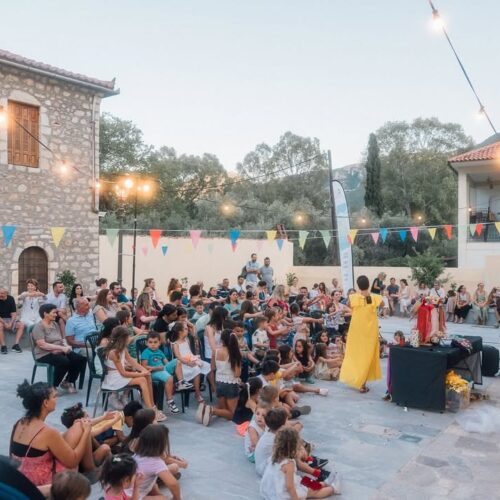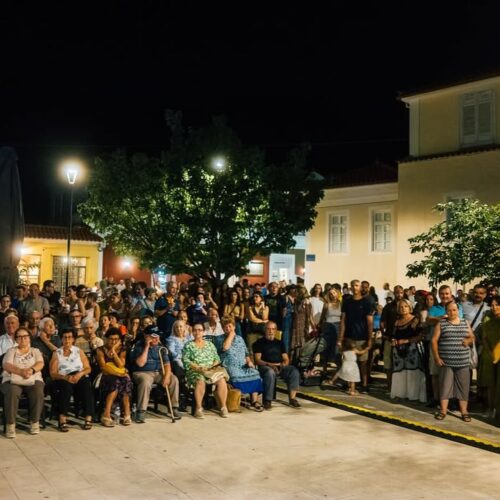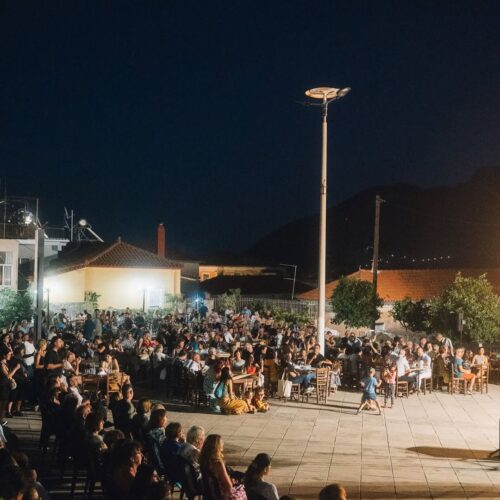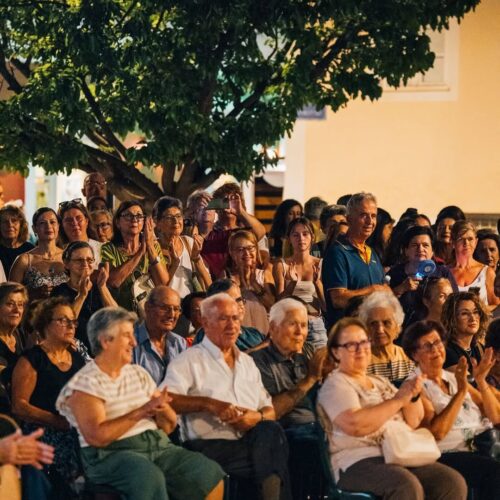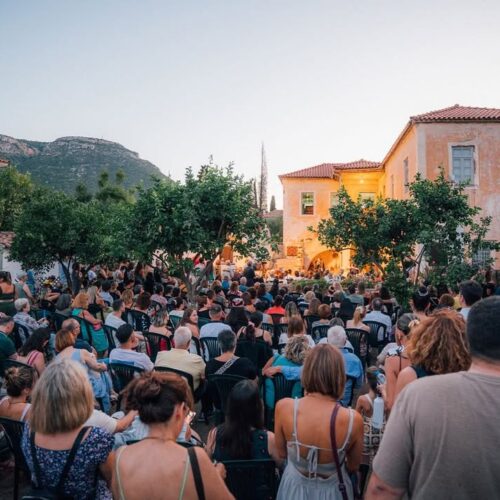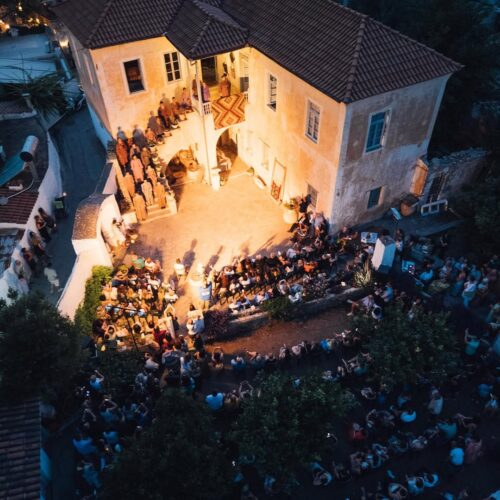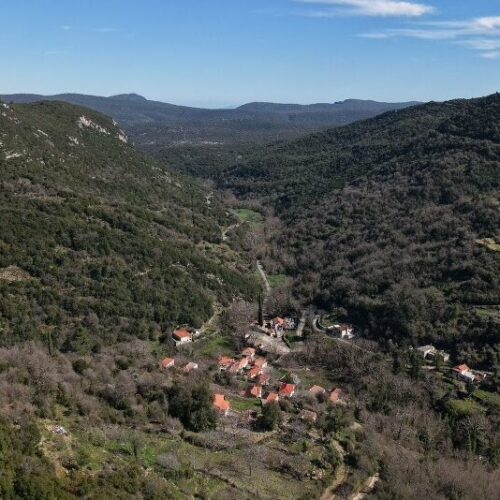

Vlisidia is a small mountain village in Southern Kynouria, built on the western slopes of Mount Parnonas at an elevation of approximately 613 meters. It is located near the border with the Regional Unit of Laconia, east of the Mazarakis peak (1,559 m), within a deep ravine crossed by the Mavriani torrent. The landscape of the area is characterized by rugged mountainous terrain, small arable plots, and traditional agricultural activities—elements that have shaped the character of the settlement.
Vlisidia belongs to the so-called Kounoupochoria, a group of settlements in the region that also includes Kounoupia, Amygdalia, Pigadi, Chouni, and Peleta. For centuries, these communities formed a network of small mountain villages with close social and economic ties, based primarily on livestock farming and small-scale agriculture.
Historically, the settlement is first mentioned as early as 1835, when it was incorporated into the then-municipality of Mariou under its former name, Neochori. In 1915, by royal decree (Government Gazette 273A/August 11, 1915), it was renamed Vlissidia, the name by which it is known to this day. Under the current administrative structure, in accordance with the Kallikratis Plan, it forms, together with Fylatika, the Local Community of Vlisidia within the Municipal Unit of Leonidio in the Municipality of South Kynouria. It is a settlement with a very small population; according to the 2011 census, there were 33 residents in the settlement and 38 in the community.
Despite its small size, Vlesidia is a prime example of the small mountain communities of Parnonas, where the natural environment, historical continuity, and traditional ways of life continue to leave a strong imprint to this day.
Vasilis P. Georgiou designed the seal for the community of Vlisidia

Vasilis P. Georgiou

Find the stamp at the Vlisidia Elementary School
Please contact Thanasis Manitaras by calling 6978763268
Vasilis Georgiou has been working in the field of visual communication for thirty years. Today, the main pillars of his research and work are: first, the study of the history and evolution of the alphabet, through writing tools and methods, as well as through the mechanical reproduction of texts; second, the effect that the form of letters can have on the reader—text as image—and third, the methods used to convey written information, whether through propaganda or through art.