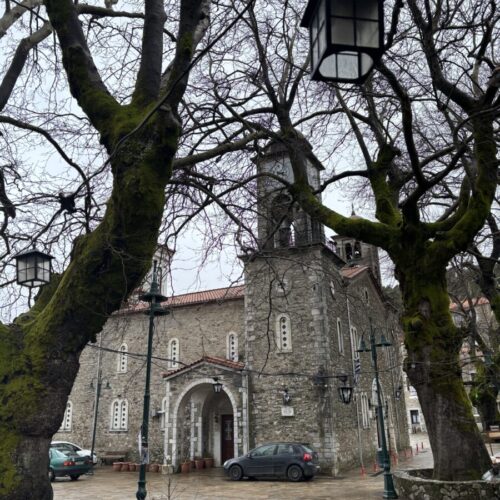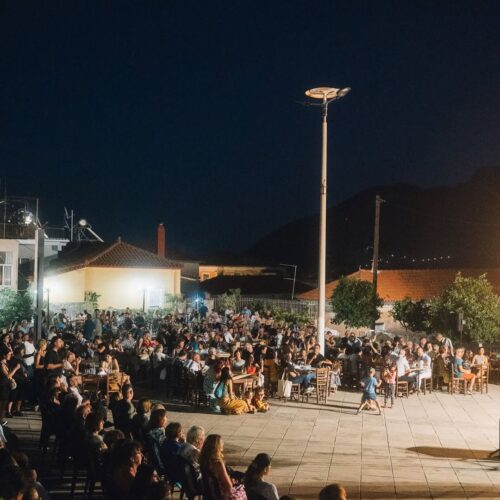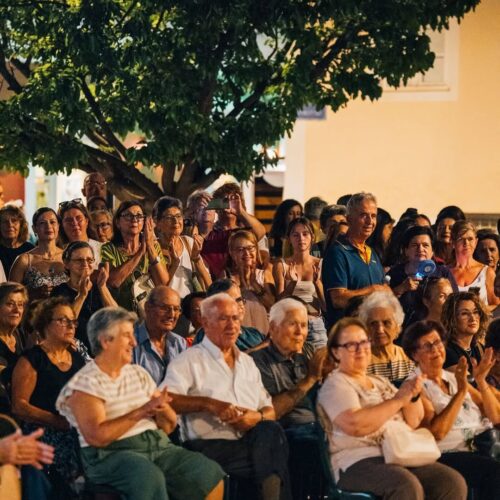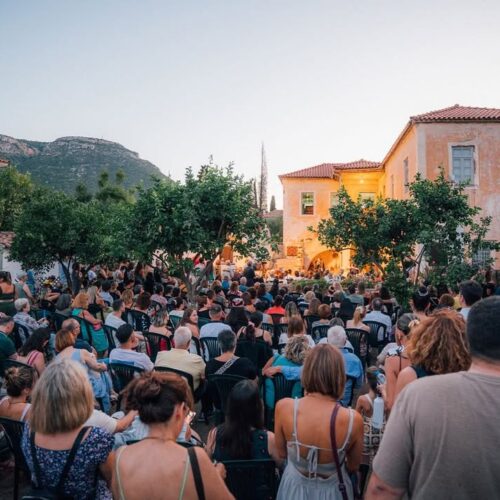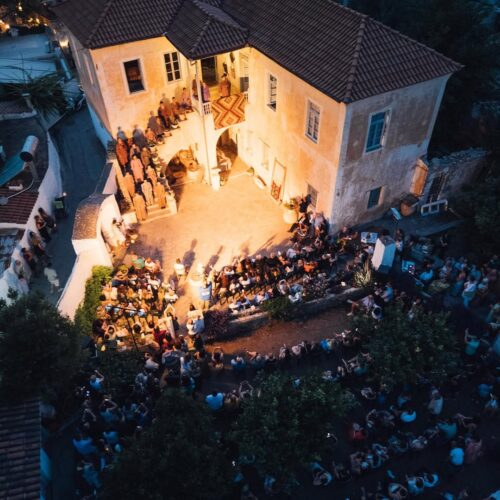
Kosmas is a mountain village in Southern Kynouria, built in the southeastern part of the Parnonas mountain range at an elevation of approximately 1,150 meters, amidst dense fir forests. Its location, between Arcadia and Laconia, makes it an important passageway connecting the two regions; it is approximately 32 kilometers from Leonidio and 50 from Tyros. Kosmas has largely retained its traditional character and, for this reason, is counted among the villages of mountainous Arcadia that have been designated as traditional settlements. Due to its high elevation, the village experiences marked seasonal changes: during the winter months, it is often covered in snow, and many residents move to lower-lying areas of Laconia, such as Geraki and Vrontamas.
The area has been inhabited since ancient times. On the site of the present-day village stood the ancient town of Selinus, which housed a sanctuary dedicated to Apollo Maleates. Important archaeological finds have been unearthed in the area, such as Archaic-period statuettes bearing dedicatory inscriptions to the god, which are now housed in the National Archaeological Museum of Athens. In later centuries, the area became associated with the history of the Tsakonians, who preserved their language and traditions despite political and social upheavals. During the Byzantine period, the Tsakonians were often employed as castle guards and sailors in the fleet, while Slavic populations also settled in the region and were gradually assimilated.
During the Frankish occupation and the Ottoman period, Parnonas served as a refuge for bandits and freedom fighters, while the village played an active role in the Revolution of 1821, with more than one hundred fighters from Kosmi. The residents’ contribution continued in subsequent wars, from the Greco-Turkish War of 1897 through World War II. The period of the Occupation was particularly dramatic: in January 1944, Kosmas was almost completely burned to the ground by German forces in retaliation for resistance activities in the area, resulting in the destruction of the vast majority of the village’s homes. Despite the destruction and the hardships that followed, the residents returned and rebuilt the village, keeping alive the memory and historical identity of the place.
The determination of the residents of a village ravaged by the occupation was enough for them to build, on their own and with their own hands, the road that would connect the village to the northeastern Peloponnese and Laconia within 100 days.
Today, Kosmas is one of the most important mountain villages in Parnonas, where the natural environment, traditional architecture, and historical heritage come together to form a unique cultural landscape.
Natasha Polyzou designed the seal for the community of Kosmas

Natasha Polyzou
Natashouko

Find the stamp at the Kosmas of Kynouria Historical Memory Exhibition
Please contact Yiannis Tsolomitis by calling 6981896638
My name is Natasha Polyzou. I’m a graphic designer, and I live and work in the center of Athens, which I love so much, but sometimes I dream of living a little farther away from it.
When I want to express myself, I pick up my pencil. Sometimes I draw like natasouko because it’s easier for me to draw what I’m feeling that way.
I am a co-founder of Today Studio, a small office that I share with Maria.
I like clean concepts, cheerful identities, and projects with soul.